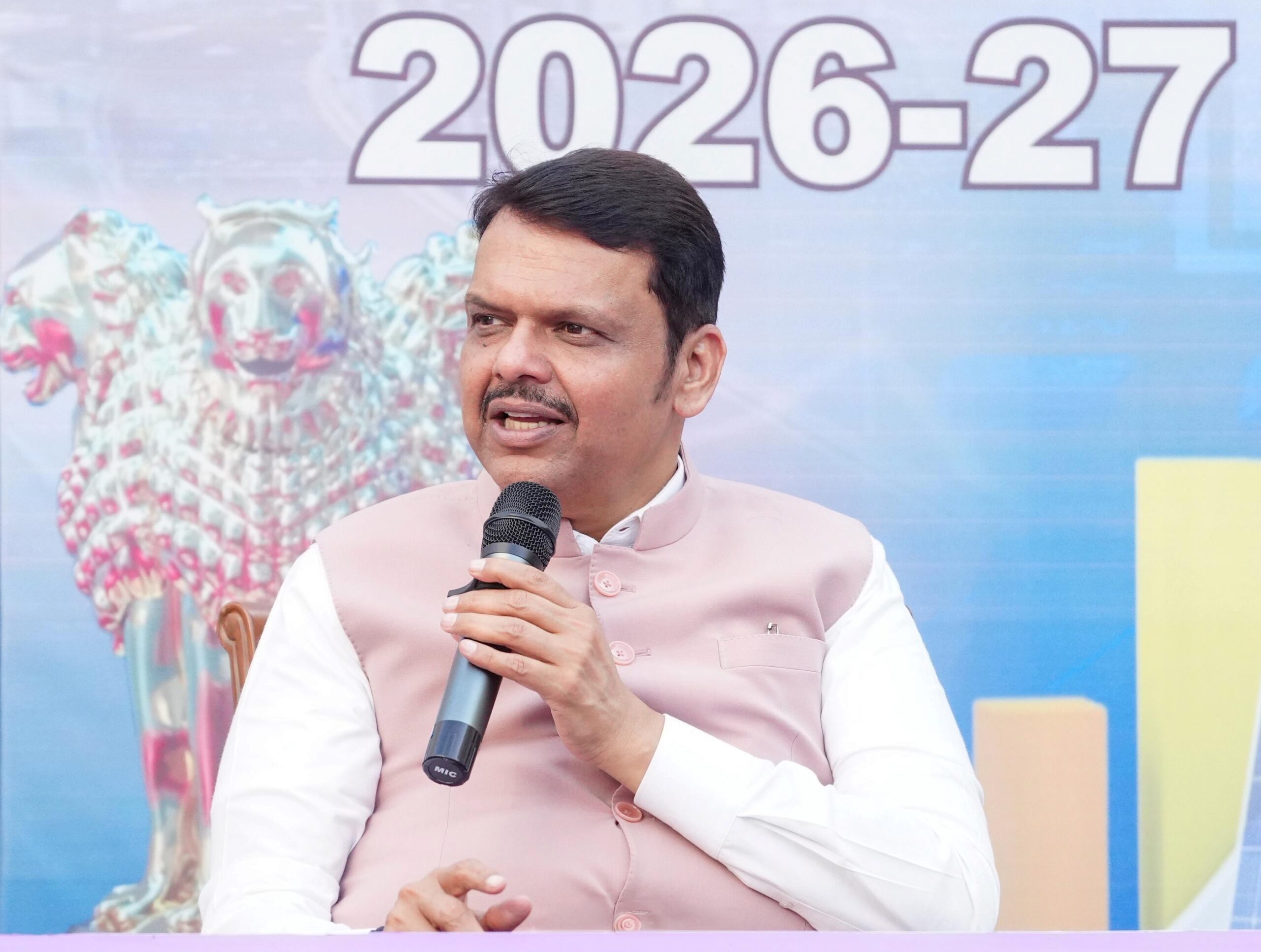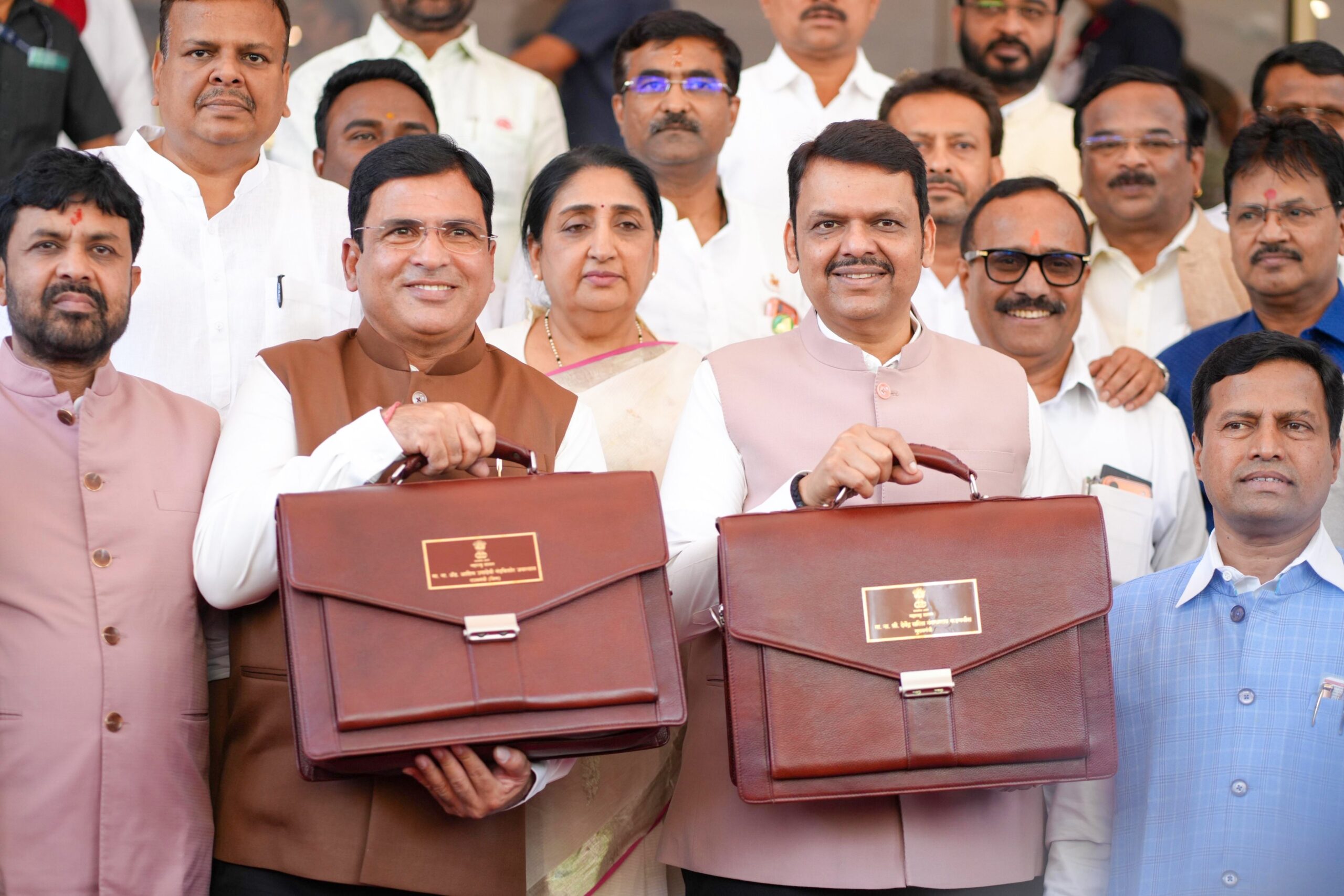
Mumbai: Maharashtra Chief Minister Devendra Fadnavis on Friday presented the state budget for 2026–27 in the Assembly with a total outlay of ₹7,69,467 crore, announcing several measures aimed at boosting agriculture, infrastructure, innovation and social welfare.
A key highlight of the budget was the announcement of a crop loan waiver of up to ₹2 lakh for farmers under the Punyashlok Ahilyabai Holkar Farmers’ Loan Waiver Scheme. The waiver will apply to crop loans outstanding as of September 3, 2025.
Fiscal and Revenue Estimates
The budget projects a revenue deficit of ₹40,552 crore and a fiscal deficit of ₹1,50,491 crore for the financial year.
The government has estimated revenue receipts of ₹6,16,099 crore against revenue expenditure of ₹6,56,651 crore. According to Fadnavis, the state has managed to keep the revenue deficit below 1 percent of Gross State Domestic Product (GSDP) and the fiscal deficit below 3 percent of GSDP.
As per revised estimates for 2025–26, revenue receipts are expected to reach ₹6,01,789 crore, higher than the earlier budget estimate of ₹5,60,964 crore. Revenue expenditure for the year is estimated at ₹7,55,920 crore compared to the budget estimate of ₹7,00,020 crore.
Roadmap for ‘Viksit Maharashtra 2047’
In his 1-hour-24-minute budget speech, the Chief Minister outlined a long-term roadmap for “Viksit Maharashtra 2047.”
He said the state aims to become a $1 trillion economy by 2030 and expand to a $5 trillion economy by 2047.
Support for Farmers and Agriculture
The government announced an allocation of ₹20,000 crore to provide free electricity to farmers operating water pumps of up to 7.5 horsepower (HP).
A pilot project using artificial intelligence will also be launched in 75 villages, providing farmers with real-time information on weather patterns, crop trends and soil health to improve agricultural productivity.
Infrastructure Development Plans
The budget also emphasised transforming Maharashtra into a “seamless multimodal hub.”
The state plans to develop 1,200 km of metro rail network and over 6,000 km of expressways by 2047. Additional funding and faster execution have been proposed for the Mumbai–Pune high-speed rail (bullet train) corridor.
To reduce congestion in Mumbai, the Sewri–Worli connector is expected to be completed by September 2026, while South Mumbai will be linked to the Samruddhi Expressway by 2028.
The government also plans to construct underground tunnels in Mumbai and Pune to ease traffic bottlenecks.
Boost for Startups and MSMEs
To strengthen the startup ecosystem, the Chief Minister announced the development of a Startup and Innovation Centre on 130 acres in Wadala.
A new commissionerate for Micro, Small and Medium Enterprises (MSMEs) will also be established to provide end-to-end support to businesses.
The Mumbai Metropolitan Region, Pune and Nagpur will be developed as major growth hubs, with a combined investment of ₹5,000 crore over the next five years.
Social Welfare and Housing
Fadnavis said the government will continue the Ladki Bahin Yojana, though a verification exercise is underway to ensure benefits reach genuine beneficiaries.
The state has also spent ₹33,410 crore under the Pradhan Mantri Awas Yojana-Gramin for rural housing. Future projects under the scheme will include mandatory rooftop solar installations.
Film City in Vidarbha
To promote the entertainment industry beyond Mumbai, the government announced plans to develop a new film city at Ramtek in the Vidarbha region, aiming to decentralise film production and create new opportunities in the sector.
Officials said the budget focuses on economic growth, sustainable development and welfare initiatives, aligning with the state’s vision of building a developed and prosperous Maharashtra by 2047.