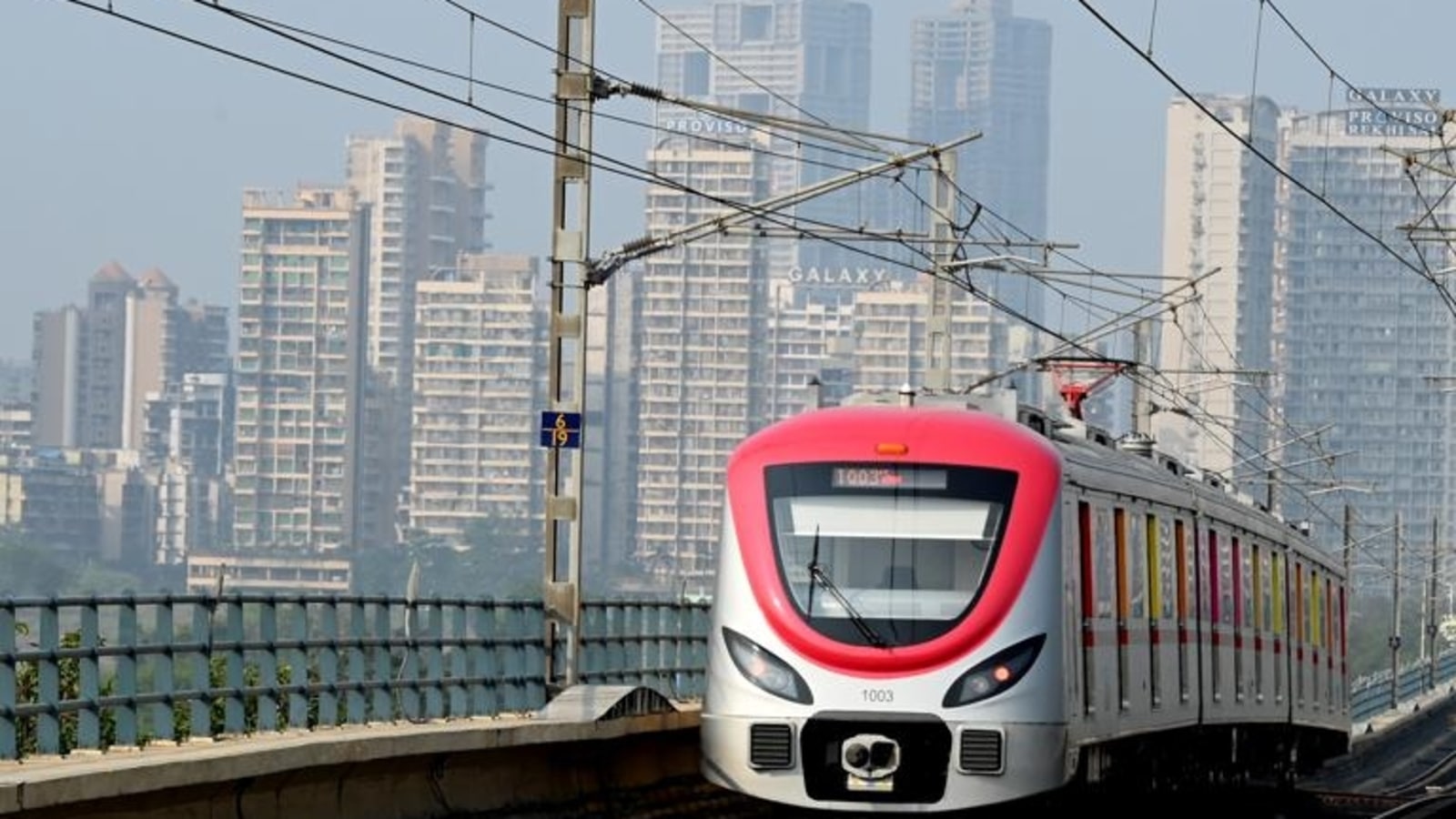
India’s metro rail network has witnessed rapid expansion in recent years, emerging as one of the largest urban transportation systems in the world and significantly transforming mobility in major cities.
Union Minister of State for Housing and Urban Affairs Tokhan Sahu said that India now has the third-largest metro rail network globally, with over 1,143 kilometres of metro lines operational and around 936 kilometres under construction across 29 cities.
The minister said the metro rail system has become a key pillar of modern urban infrastructure, helping cities tackle traffic congestion, reduce pollution and provide faster, safer and more reliable public transport.
Metro Services Expand from 5 Cities to 29 Cities
According to the Ministry of Housing and Urban Affairs, metro services were available in only five cities in 2014, but the network has since expanded rapidly to 29 cities across the country.
Nearly 11.5 million passengers now use metro services daily, highlighting the growing importance of metro rail as a preferred mode of urban transport.
Under the leadership of Prime Minister Narendra Modi, the government has accelerated the development of metro rail projects to improve urban connectivity and strengthen public transport systems.
Delhi Metro Leads India’s Urban Transport Revolution
The Delhi Metro, which began operations on December 24, 2002, played a pioneering role in introducing modern metro rail systems in India.
Developed by the Delhi Metro Rail Corporation, the project set new benchmarks for efficiency, punctuality and passenger convenience in urban transport.
The Delhi Metro project was initiated during the tenure of former Prime Minister Atal Bihari Vajpayee, whose government laid the foundation for metro rail development in India.
Since then, metro rail systems have expanded to multiple cities including Bengaluru, Mumbai, Hyderabad, Chennai, Kochi, Ahmedabad, Nagpur, Pune and Jaipur, among others.
Metro Systems Transform Urban Mobility
Officials say metro rail systems are playing a major role in reducing travel time, improving connectivity and lowering dependence on private vehicles.
The introduction of modern metro infrastructure has also improved civic discipline, commuter safety and accessibility to education and employment opportunities, particularly for women and students.
The use of metro systems has also contributed to lower traffic congestion and reduced environmental pollution in major urban centres.
Public Transport Key to Sustainable Cities
The government has emphasised that increasing the use of public transport systems such as metro rail is essential for building cleaner, safer and more sustainable cities.
Metro expansion is expected to continue in the coming years with several projects under construction and new proposals being planned to further improve urban mobility across India.
Officials describe the growth of metro rail in the country as a “silent revolution” in India’s urban landscape, reshaping the way millions of people commute every day.